




Exile Changes a Family’s Fate — Ahmed Ibrahim’s Journey from Idlib to Lebanon
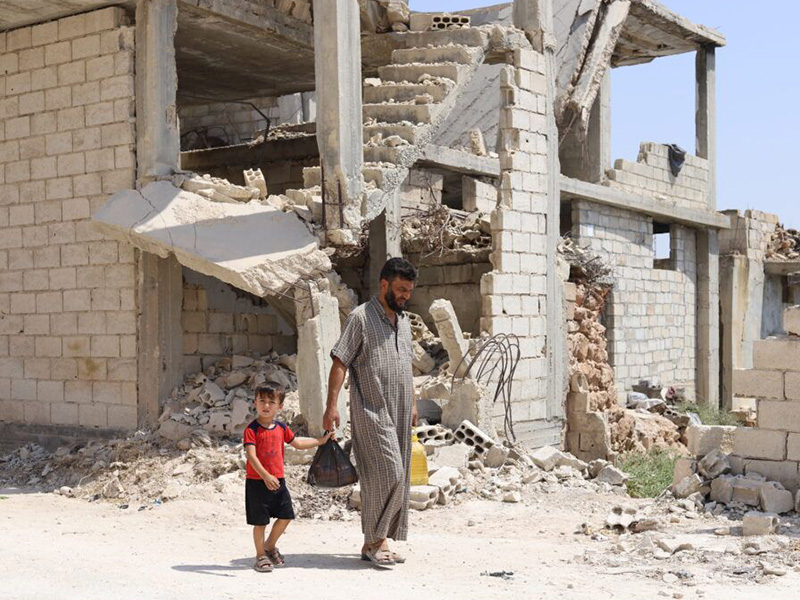
Amid the Syrian war that erupted in 2011, stories of displacement and exile were never just statistics in international reports—they were human narratives shaped by loss, anxiety, and hope for the future. Among these stories is the experience of Ahmad Ibrahim (a pseudonym), from the countryside near Ma’arrat al-Numan in Idlib. The crisis forced him to make difficult decisions that completely altered the course of his life and that of his family.
Ahmad lived with his wife and children in a small village in rural Idlib, where life was simple, relying on agricultural and manual labor. Before 2012, their small home and modest daily routine symbolized the stability the family had grown accustomed to.
But as bombing and clashes escalated in rural Idlib and on the outskirts of Ma’arrat al-Numan, fear began to dominate their daily life. The increasing military presence, lack of access to healthcare, and concern for the children led Ahmad to think realistically about his family’s future.
In 2012, with the security situation deteriorating, Ahmad made one of the hardest decisions of his life: he sent his wife and children to Lebanon in search of relative safety and better living opportunities, while he stayed behind in the Syrian countryside to manage his remaining property and try to support them from afar.
That period was filled with anxiety, as he did not know what the fate of his family would be in a foreign country, nor how they would manage to settle under unfamiliar and uncertain circumstances.
Years on the Border — Life in Lebanese Camps
When his wife and children arrived in Lebanon, they faced harsh realities in the refugee camps where thousands of Syrians live, often without access to basic services such as clean water, electricity, and healthcare. Families typically reside in tents or small shelters exposed to wind and rain. Reports from similar situations in Lebanese camps indicate:
-
Many families face shortages of water and electricity, and deteriorating healthcare services.
-
Children often do not attend school due to economic difficulties or high tuition costs.
-
Poverty pressures families to struggle even to secure the most basic daily necessities.
This suffering is not unique; it mirrors the experiences of thousands of Syrian refugees in Lebanon who live below the poverty line, most relying on irregular daily work or limited support from humanitarian organizations.
Ahmad’s wife occasionally worked simple jobs to earn a living, while Ahmad tried to support them from afar by sending what money he could, despite his limited income in war-torn Syria. They spent many years in tents and temporary centers, under constant tension over whether they could return home or achieve true stability.
Exile affected not only the family’s material situation but also their psychological and social relationships:
This situation reflects the reality of many Syrian families forced to separate geographically due to security and economic pressures, drastically altering the course of their lives.
Like thousands of Syrian refugees in Lebanon and elsewhere, Ahmad’s family continued to face endless challenges—from seeking opportunities for education, work, and dignified living to adapting to a new society while enduring the persistent pain of losing their homeland.
Their story is not merely a statistic in refugee reports but a vivid portrayal of a life that has lost much, yet strives to survive against all odds—a reminder that exile changes more than geography; it writes new chapters in a person’s life that cannot easily be erased.
Leave a Reply
Your email address will not be published. Required fields are marked *
Search
Category